Immediate Safety Steps After a Storm-Damaged Tree
When a severe storm hits Boston, falling trees and broken branches can pose serious risks to your home, family, and neighbors. The first priority after a storm is ensuring everyone's safety. If a tree has fallen on your property or is hanging dangerously over your roof, do not attempt to remove it yourself. Chainsaw work on damaged trees is extremely hazardous, especially when branches are under tension or the tree is partially suspended.
Start by keeping people and pets away from the damaged tree and any surrounding debris. If the tree has damaged power lines, do not touch it and contact your utility company immediately. For trees leaning against your home or blocking access routes, your next step should be to contact an Emergency Tree Service provider. Boston Tree Service offers 24/7 response for storm emergencies, and you can reach our team at (857) 380-7444 to assess the situation and begin removal safely.
Documenting Storm Damage for Your Insurance Claim
Insurance claims for fallen trees and storm damage require thorough documentation. Before any removal work begins, take clear photographs and videos of the damage from multiple angles. Capture wide shots showing the tree's position relative to your home, close-ups of the damage to your roof or siding, and images of the tree itself. Document the date and time of the storm, and note any weather conditions (high winds, heavy rain, snow load) that contributed to the damage. These details strengthen your claim and provide evidence of the event's severity.
Write down a detailed description of what happened: which tree fell, what it damaged, and when you discovered the damage. If neighbors witnessed the event, collect their contact information. Most homeowners insurance policies cover tree removal when the tree has caused direct damage to insured structures, but coverage varies. Check your policy or contact your insurance agent before hiring a service. When you do engage a professional, request an itemized invoice that breaks down labor, equipment, and debris removal costs, as this documentation is essential for your claim.
When to Call Emergency Tree Removal Near Me
Not every fallen tree requires emergency response, but certain situations demand immediate professional attention. If a tree is blocking your driveway and preventing emergency vehicles from accessing your home, if it's hanging over a neighbor's property, or if it's touching electrical lines, you need professional help right away. A partially fallen tree that could shift or collapse unexpectedly is also an emergency. In Boston's densely populated neighborhoods, a fallen tree can quickly become a public safety issue.
Storm-related Tree Removal is often more complex than routine removals because the tree's structural integrity is compromised. Branches may be under tension, the root system may be partially exposed, and the tree could shift during removal. This is why professional expertise matters. Boston Tree Service has handled hundreds of storm emergencies across the area and understands the unique challenges of Boston's urban and suburban landscape. When you call (857) 380-7444, our team can often schedule same-day or next-day service for urgent situations.
Understanding Fallen Tree Insurance in Massachusetts
Massachusetts homeowners often wonder whether their insurance covers fallen trees. The answer depends on the cause and the damage. If a healthy tree falls due to normal weather, coverage may be limited to the damage the tree caused to your insured structures, not the tree removal itself. However, if the tree falls due to a covered peril like a severe storm, and it damages your roof, fence, or other property, your homeowners policy typically covers the damage repair. Tree removal costs are sometimes covered as part of the damage claim, particularly when the tree must be removed to access and repair the damaged structure.
Massachusetts state law and individual policy language vary, so review your specific coverage. Some policies have limits on tree removal reimbursement (often $500 to $1,500 per tree), while others may exclude removal costs entirely if the tree didn't damage an insured structure. This is why documenting the storm event and the direct damage is critical. When filing your claim, be clear about what the tree damaged and provide your insurance company with professional estimates. Boston Tree Service can provide detailed estimates that satisfy insurance requirements and help you understand what costs may be recoverable.
The Cleanup Process: Removal, Hauling, and Stump Grinding
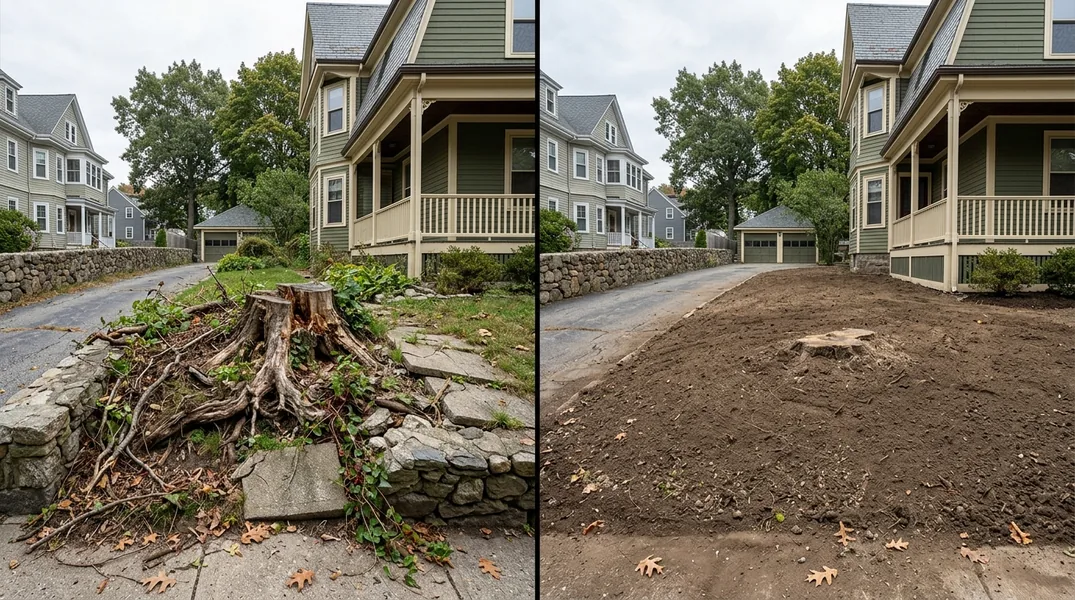
After a major storm, the cleanup process involves more than just cutting up the fallen tree. Professional Tree Removal includes safely felling any partially standing trees, cutting the trunk and branches into manageable pieces, hauling away all debris, and often addressing the stump. Depending on your property and future plans, you may want Stump Grinding to fully remove the root system and restore your yard to usable space. This comprehensive approach prevents future hazards and gives you a clean slate for replanting or landscaping.
The scale of cleanup after a major storm can be overwhelming. Multiple trees may be down, debris may be scattered across your property and into your neighbors' yards, and the work requires heavy equipment and trained professionals. Attempting to manage this alone risks injury and property damage. Boston Tree Service coordinates the entire process, from initial assessment through final debris removal, so you can focus on other storm recovery needs. Request a free estimate to understand the full scope and cost of your cleanup.
Preventing Future Storm Damage: Tree Maintenance and Inspection
While you cannot prevent all storm damage, proactive tree maintenance reduces risk significantly. Trees that are healthy, properly pruned, and structurally sound are far less likely to fail during high winds or heavy snow. Tree Trimming & Pruning removes dead branches, improves air flow through the canopy, and reduces the sail effect that catches wind. Regular inspection by a experienced arborist can identify weak branch unions, disease, or structural problems before they become dangerous. This is especially important for older trees or species prone to storm damage in the Boston area.
If you have large trees near your home, consider having them evaluated annually, particularly before fall and winter when storms are most severe. Removing hazardous branches, thinning dense canopies, and addressing diseased wood are investments that protect your property and your neighbors' safety. After a storm passes and your immediate emergency is handled, this is an ideal time to assess your landscape and plan preventive work. Boston Tree Service can inspect your trees and recommend maintenance to minimize future risk. Call (857) 380-7444 or visit our website to schedule a consultation and protect your property for years to come.
Looking for a professional tree service contractor in Boston? Boston Tree Service responds fast for all your tree service needs.
Get a Free QuoteOur services: Tree Removal · Tree Trimming & Pruning · Stump Grinding