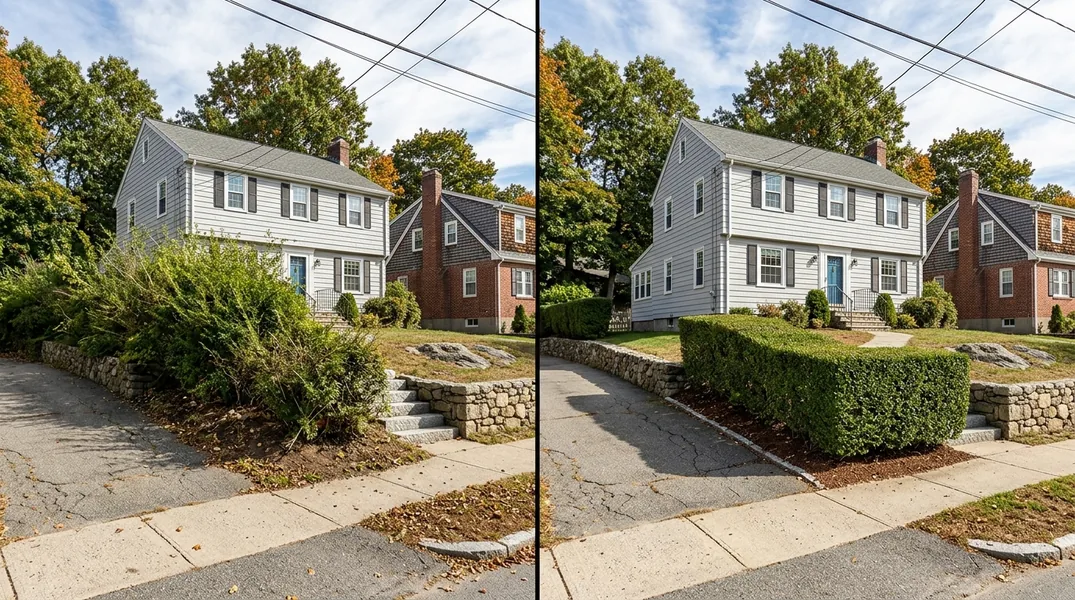
Tree Trimming vs Removal: Understanding Your Options
When you notice a problem with a tree on your property in Boston, your first instinct might be to remove it entirely. But not every struggling tree needs to come down. The decision between Tree Trimming & Pruning and Tree Removal depends on several factors, including the tree's health, its location, and the specific issues you're facing.
Many homeowners don't realize that a significant portion of trees showing signs of stress or damage can actually be saved through proper trimming and pruning techniques. These methods remove dead or diseased branches, improve air circulation, and allow the tree to redirect its energy toward healthy growth. However, there are legitimate situations where removal is the only safe and responsible choice. Understanding the difference between these two approaches will help you make an informed decision that protects both your property and your landscape investment.
Signs Your Tree Can Be Saved with Proper Trimming
A tree is often a candidate for trimming and pruning if the damage or disease is limited to specific branches or sections rather than affecting the entire structure. If your tree has dead limbs hanging over your home, walkway, or driveway, Tree Trimming & Pruning can remove those hazards while preserving the rest of the tree. Similarly, if you notice crossing branches, excessive interior growth, or limbs rubbing against your roof, trimming is typically the appropriate solution.
Trees with minor disease or pest issues may also be salvageable. Early detection of problems like fungal infections or insect infestations means that removing the affected branches and treating the remaining tree can halt the problem's progression. A tree with good overall structure, strong branching patterns, and sound wood is worth the investment in professional care. Additionally, if your tree provides significant shade, aesthetic value, or privacy screening, the cost and effort of trimming is almost always justified compared to replanting and waiting years for a mature replacement to establish itself.
Hazard Tree Assessment Boston: When Removal Becomes Necessary
A Tree Removal becomes the prudent choice when a tree poses a genuine safety risk that cannot be adequately managed through trimming alone. A hazard tree assessment in Boston evaluates whether a tree is likely to fail and cause injury or property damage. Signs that removal may be necessary include significant lean or tilt, large cavities or hollow sections in the trunk, major cracks or splits, or extensive dead wood throughout the canopy rather than just isolated branches.
Trees with root problems also become candidates for removal. If a tree has been topped (cut off at a certain height rather than properly pruned), it often develops multiple weak branches that grow from the cut point. These branches are structurally inferior and prone to breaking during storms. Similarly, trees with root rot, girdling roots, or those growing in severely compacted soil may lack the structural integrity to remain safe. Storm damage that leaves a tree with a broken leader or multiple major limbs torn away may be beyond saving, especially if the damage comprises more than 25 percent of the canopy.
The Health and Age Factor in Your Decision
A tree's overall health status is one of the most important factors in deciding whether trimming or removal makes sense. A young, vigorous tree with good form and minimal disease is worth investing in through professional Tree Trimming & Pruning. These trees have decades of productive life ahead and will benefit greatly from proper maintenance. In contrast, an older tree that is already in decline, with thin foliage, sparse branching, and multiple health issues, may not justify the ongoing cost of care.
Consider also the tree species and its lifespan. Some species are naturally long-lived and resilient, while others are prone to disease or have shorter lifespans. A mature oak or maple with a few problem branches is very different from an older ornamental crabapple showing signs of decline. Professional arborists can assess your tree's remaining useful life and help you understand whether investing in trimming now will pay dividends over the next 10, 20, or 30 years, or whether you're better served by planning for removal and replacement.
Tree Removal Cost in Boston: What to Budget
Understanding the pricing difference between trimming and removal can help inform your decision. Tree trimming is generally a less expensive service, typically ranging from a few hundred to a couple thousand dollars depending on tree size, height, and complexity. Removal, by contrast, involves felling the tree, chipping or hauling away the debris, and often includes Stump Grinding, which adds to the total cost. For large trees in Boston, removal can easily cost several thousand dollars.
However, when you factor in the long-term value, trimming a healthy tree annually or every few years is often more economical than removal and replanting. A mature shade tree provides cooling benefits, increases property value, and improves air quality. These benefits accumulate over decades. If your tree is salvageable, the relatively modest investment in professional trimming is typically far less expensive than removing it and then waiting 15 to 20 years for a new tree to provide similar benefits. Request a free estimate to compare the actual costs for your specific situation.
When to Call Boston Tree Service for a Professional Assessment
The best way to determine whether your tree should be trimmed or removed is to have a experienced arborist evaluate it in person. At Boston Tree Service, we offer comprehensive hazard assessments that look at the tree's structure, health, location, and risk factors. We'll explain our findings in clear terms and recommend the most appropriate course of action for your situation and budget. Our team has the expertise to spot problems that homeowners might miss and the experience to know which trees can be saved.
Don't delay if you have concerns about a tree on your property. Storm damage, disease, or structural problems can worsen quickly, especially during New England winters. Whether your tree needs professional Tree Trimming & Pruning, removal, or emergency care, we're here to help. Call Boston Tree Service at (857) 380-7444 today to schedule your assessment, or visit our website to request your free estimate. We serve the entire Boston area and surrounding communities, and we're committed to helping you make the right choice for your trees and your home.
Looking for a professional tree service contractor in Boston? Boston Tree Service responds fast for all your tree service needs.
Get a Free QuoteOur services: Tree Removal · Tree Trimming & Pruning · Stump Grinding